
Profits in Plain Sight: Your ROI with LEAN Sheet Metal Racking

In most fabrication shops, discussions about return on investment (ROI) tend to focus on big-ticket items: new fiber lasers,automation systems, facility expansions, or advanced software upgrades. These are essential for staying competitive, but they often overshadow one of the biggest hidden drains on profitability—material storage and handling.
Too many manufacturers treat material handling as a fixed, unavoidable cost of doing business. It's rarely measured with the same rigor applied to machine uptime, labor efficiency, or part cycle times. Yet when you start tracking the real expenses—time lost searching for the right sheet, retrieving it from stacks, staging materials, dealing with damage, orgenerating scrap—the numbers add up quickly and dramatically.
4 Ways Traditional Sheet Metal Storage Systems Lose Money Every Day
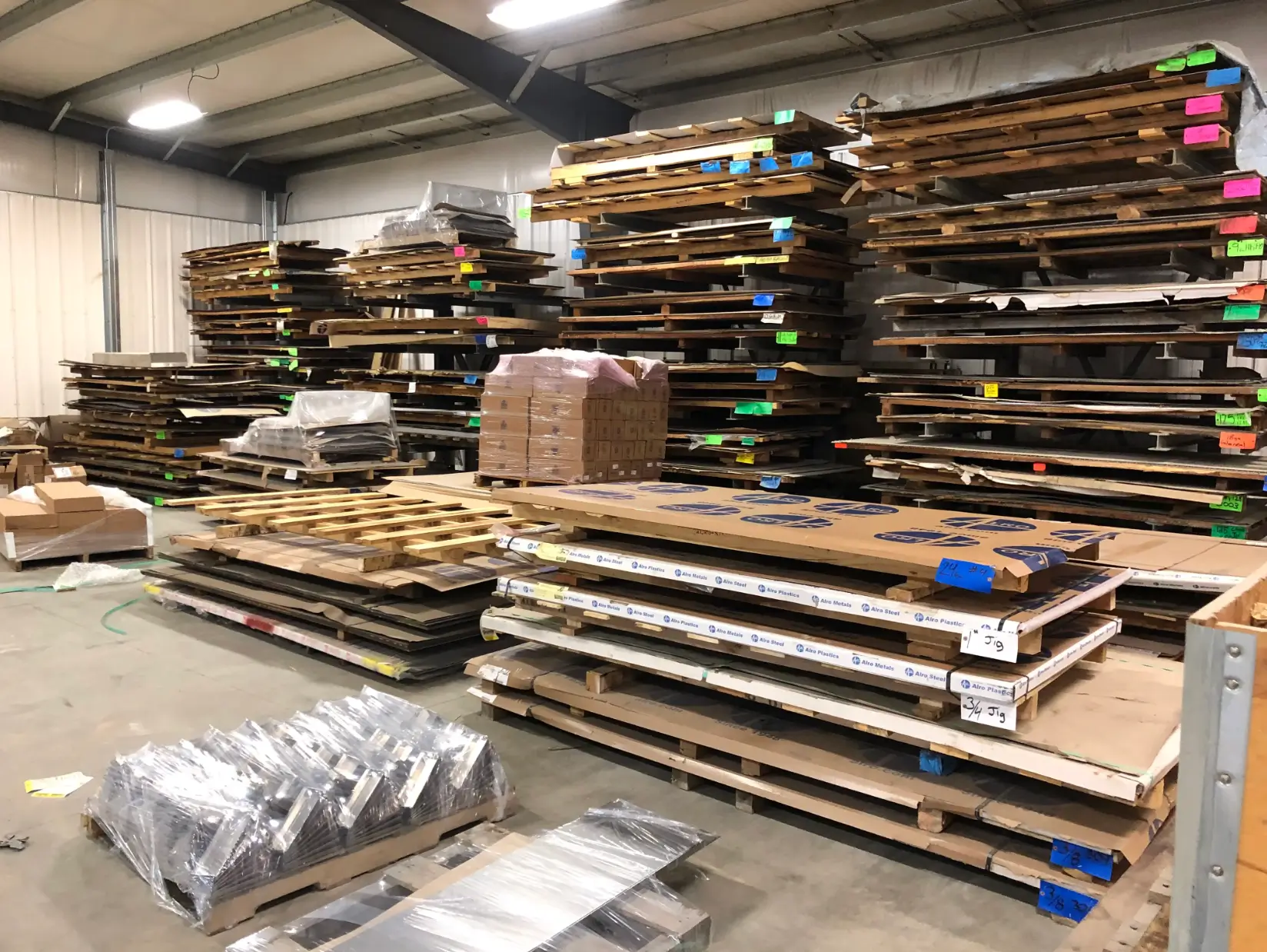
In our experience with customers, we find that there are 4 main causes of unnecessary cost build-up in operational storage workflows:
1. Excess Waste with Wooden Pallets and Consumables
Pallet usage is often viewed as a necessary expense, but over time it becomes a significant recurring cost. Shops pay for pallet purchasing, pallet disposal, storage space, and the additional handling steps pallets create during both inbound and outbound material flow.
2. Wasted Time in Material Handling
Consider a typical scenario: Pallets stacked 10 high on the floor. Accessing the bottom one requires moving the top 9 (often 15+ minutes per retrieval), then restacking them afterward to free up forklift space. This non-value-added labor could instead support profitable activities like running machines or fulfilling orders. Worse, that same handling delay often leaves expensive equipment idle.
3. Machine Waiting Time
In many shops, production equipment sits idle simply because material is not staged or accessible when needed. Forklift conflicts, poorstaging processes, and disorganized storage all contribute to downtime. Considering that laser cutting equipment represents one of the largest capital investments in a fabrication facility, even small reductions in idle time create massive ROI.
4. Damaged Material
Material damage is frequently underestimated. In traditional storage environments, sheet-to-sheet contact, forklift blade contact, and unstable stacks all contribute to scratched or scrapped material. Even minor surface damage can impact downstream quality or customer perception.
How LEAN provides the best ROI for your operation
Our goal is always to deliver a tailored ROI analysis specific to your operation. We partner closely with you to quantify the real impact based on your unique setup.
Key variables we evaluate include:
- Your machine lineup (e.g., fiber lasers, turret punches, shears, de-coiling lines, plasma tables, waterjets) and whether they feature automated loading/unloading for raw materials or finished parts — Example: A recently installed fiber laser needs consistent material feed to run at full capacity and avoid costly downtime.
- Throughput targets and production goals
- Inventory profile: high-mix/low-volume vs. low-mix/high-volume
- Facility constraints: Are you trying to avoid (or delay) a costly warehouse expansion?
- Current off-site storage expenses: Are you leasing additional space for raw materials or finished goods?
- Safety and risk factors: Has a recent incident highlighted exposure to liability that better storage could prevent?
We begin by reviewing the baseline assumptions built into our ROI calculators, then customize them to reflect your actual numbers—such as labor rates, shift patterns, material touch frequency, and more.
Comparing Costs: Traditional Storage v. LEANMFGPRODUCTS
For a realistic starting point, consider a conservative industry example for a mid-sized contract metal fabricator running two fiber laser tables over a 250-day work year (using standard assumptions for labor, handling times, and operating costs):
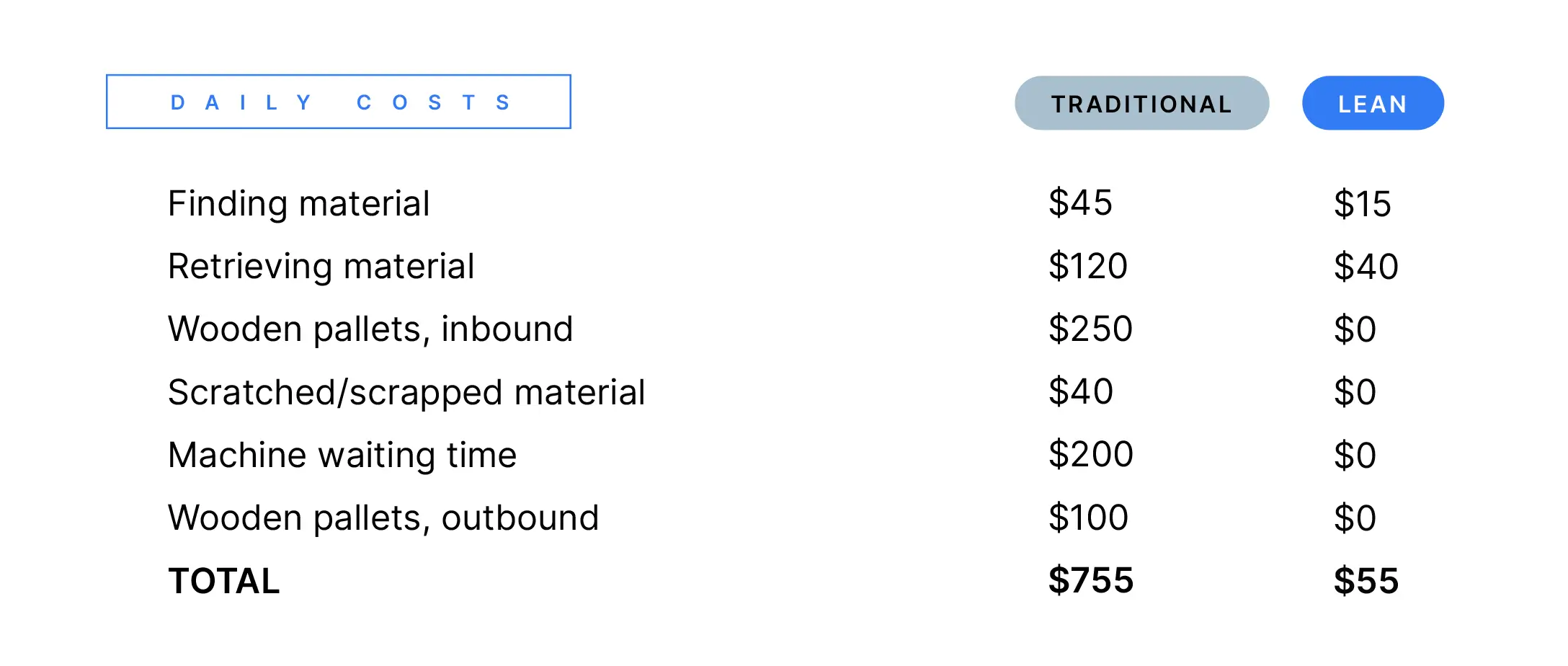
Traditional storage methods (cantilever racks, floor-stacked pallets, or buried materials) often generate daily handling-related costs around $755, totaling roughly $188,750 annually.
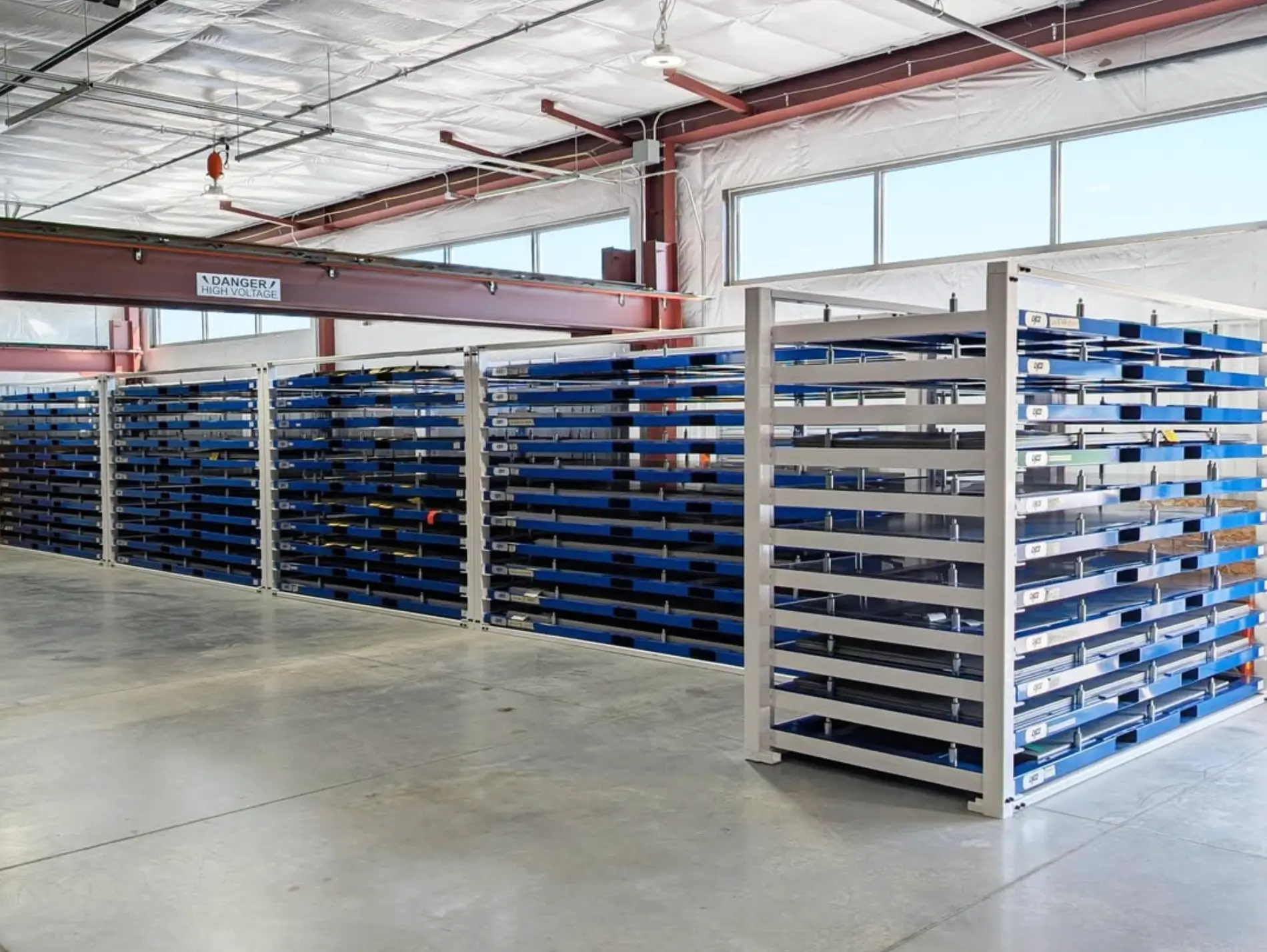
Switching to efficient LEAN Sheet Metal Racking Systems typically drops those costs to about $55 per day, or $13,750 annually.
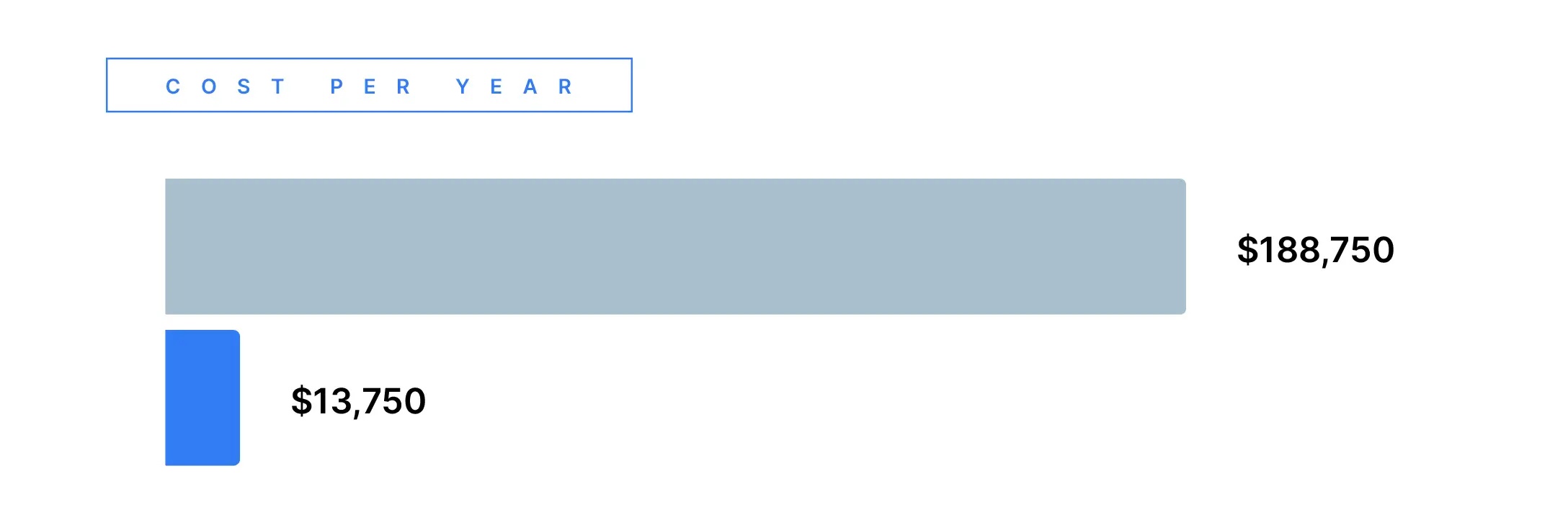
The difference? Approximately $175,000 in annual savings—driven by reduced labor waste, less damage/scrap, reclaimed floor space, minimized machine idle time, and improved safety—before accounting for secondary benefits like improved throughput, labor optimization, and machine utilization improvements.

Of course, these are illustrative figures based on common industry benchmarks. Actual results vary depending on your specific touchpoints, material variety, facility layout, and other factors.
The bottom line: Material storage and handling is not just a"back-end" expense—it's a major opportunity for measurable ROI. By addressing it thoughtfully, you can unlock hidden capacity, improve cash flow, and make your big equipment investments pay off faster.
The Strategic Impact Beyond Direct Cost Savings
While the direct financial savings are compelling, the long-term strategic benefits of LEAN Sheet Metal Racking often create even more value.
Improved organization and visual storage support better inventory accuracy and lean manufacturing initiatives. Reduced forklift traffic and clearer material zones improve workplace safety. Labor becomes more focused on value-added work instead of searching, moving, and repositioning material. Most importantly, improved material flow often increases overall production capacity without requiring additional machines or labor.
For shops planning future automation or lights-out manufacturing strategies, structured material storage is often a foundational requirement.
In Conclusion
LEAN Sheet Metal Racking transforms storage from a cost center into an operational advantage. It protects high-value inventory, keeps production equipment running, reduces labor waste, eliminates recurring consumable costs, and supports true lean manufacturing flow.
In many cases, the fastest way to increase profitability is not buying another machine. It’s making sure the machines you already own never have to wait for material again.
Start Your Build Today
Build a storage system tailored to your operational needs with our standardized product configurator or start a custom project here.
